











Understand the Power of Local currencies
Empowering Communities with Local Money
Discover how local currencies can transform your community by fostering economic resilience and promoting sustainable trade practices.
Understanding Local Money
Local money, also known as complementary currency, is a system where communities use alternative forms of currency, such as vouchers or tokens, to facilitate trade. These currencies are designed to work alongside national currencies, enhancing local economic activity by keeping wealth circulating within the community. Local money is typically issued by a trusted organization and backed by goods or services, ensuring its value and usability. By adopting local money, communities can strengthen their economic independence and resilience.
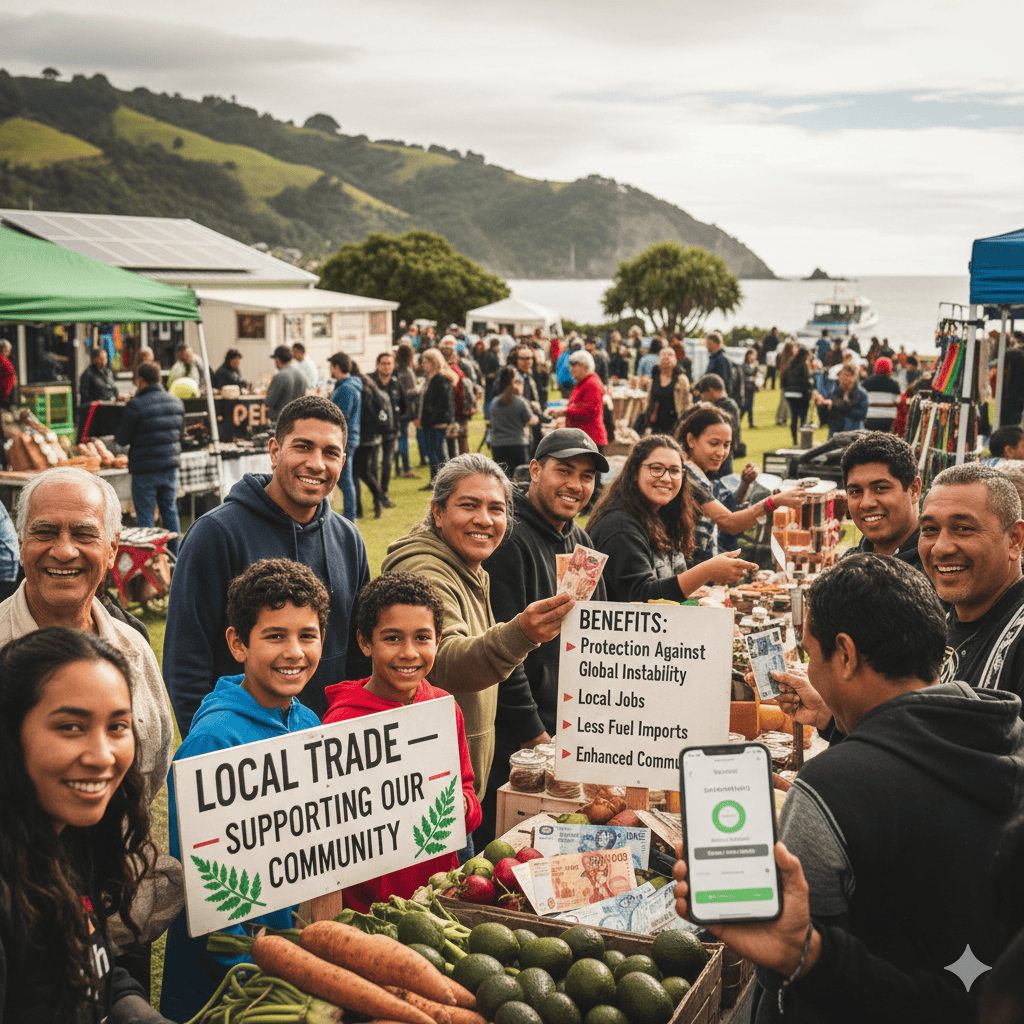
The principal advantages of community currencies are:
- Protection against global economic instability
- Stemming the leakage of community wealth to outsiders/offshore
- Support for local small/medium businesses
- Business opportunities in import substitution
- Less fuel is needed for imported products
- Increased employment opportunities
- Less conventional money required for desirable projects
- Enhanced sense of community
- Branding opportunity for the district
- Tourist attraction, especially for early adopters
— Helen Dew, Living Economies Trustee, in the May/June 2007 issue of Organic NZ.
Benefits of Local Money
Strengthening Community Bonds
Local money encourages connections among community members, fostering a sense of unity and cooperation.
Enhancing Economic Visibility
It highlights local skills and resources that might be overlooked, promoting a more inclusive economy.
Facilitating Trade in Tough Times
During economic downturns, local money provides a reliable means of exchange, supporting continued trade.
Encouraging Sustainable Practices
By reducing reliance on national currencies, local money supports environmentally friendly and sustainable economic practices.
Understanding Local Money
How Local Money Operates
1
Issuance Process
Local money begins with an issuing organization, such as a community group or business, that creates vouchers or tokens to circulate within the community.
2
Redemption Mechanism
These vouchers can be redeemed for goods or services, backed by a promise from the issuer, ensuring they hold value for users.
3
Implementation Examples
Communities may use local money to boost local trade, with businesses accepting vouchers as payment to encourage spending within the community.
Further reading (Available at our shop)
- People Money: The Promise of Regional Currencies, by Margrit Kennedy, Bernard Lietaer and John Rogers. A world tour of community and regional currencies already at work, with practical lessons for starting your own. Available at our shop.
Common Questions About Local Money
Explore answers to frequently asked questions about using local currencies and their benefits.
What are the tax implications of using local money?
Users of local money should report transactions as they would with traditional currency, ensuring compliance with tax obligations.
How does local money benefit the community?
Local money fosters economic resilience by keeping wealth circulating within the community and encouraging local trade.
Can anyone use local money?
Yes, local money can be used by both members and non-members of the issuing community, though its value is best retained locally.
What backs the value of local money?
The value is typically backed by goods or services promised by the issuer, ensuring users can redeem vouchers for tangible benefits.
Is local money only available in physical form?
No, many communities also use digital credits that can be traded online or via smartphones, offering flexibility and convenience.
What is demurrage in local currencies?
Demurrage is a system where the value of the currency decreases over time, encouraging quicker circulation and trade.