











As I promised in a previous post, I will share my thoughts on a new economic system.
We are standing at the edge of a much bigger change than most people realise. The old system is not merely unfair or clumsy — it is structurally incapable of dealing with inequality, climate change, fossil fuel depletion and the concentration of power in so few hands.
That is why I wrote The Big Shift: Rethinking Money, Tax, Welfare and Governance for the Next Economic System back in 2017. It was the result of the thinking of a group called The New Economics Party. Among them were permaculturists, Georgists, monetary reformers, and many others. This concept aligns with my current exploration of The Big Shift: Economic Reform in New Zealand.
The problem is systemic
What we call “the economy” is really a set of interconnected systems: money, land, tax, governance, energy and the commons. If we try to fix only one piece, the rest of the system pushes back. That is why so many well-intentioned reforms produce disappointing results.
The current model rewards debt, speculation and private accumulation, while leaving ordinary people to carry the burden. It also assumes endless growth on a finite planet, which is simply not possible. If we want a fairer and more resilient future, we need to stop tinkering and start redesigning.
In conclusion, by embracing the principles outlined in The Big Shift: Economic Reform in New Zealand, we can pave the way for a sustainable future that benefits everyone.
Money is not neutral
One of the core arguments in the book is that money is a human invention, not a natural law. It can be designed badly or designed well. At present, most money is created by private banks as interest-bearing debt, which means the economy is built on a treadmill that demands constant expansion just to stay upright.

We suggest a different approach: publicly created money, spent into circulation, with stability built into its design. Money should serve people and communities, not trap them in debt. If we get the money design right, the whole tone of the economy changes. But it does have a problem – land speculation.
To control inflation to 0%, we adjust the amount of money publicly created. Never by interest rates!
Money created as interest-bearing debt widens the gap between net borrowers and net lenders and creates a built-in imperative for economic growth.
In addition, if money is to truly represent the value of physical goods, it must decay at the same rate. Hence we favour a penalty for hoarding money. That acts as a circulation incentive.
The current false assumptions behind our system
When you read these you can begin to wonder if we really are an intelligent species. Each has been arrived at over the centuries after enormous pressure on governments from land barons and banks.
• You can ‘own’ land and natural resources
• Money can be created by commercial banks as interest-bearing debt and accepted by Government for payment of taxes
• The money system we have is neutral
• Government should be top down. Councils and Community Boards must be less powerful than central government
• There should be only one currency in a country
• Inflation can only be controlled by interest rate adjustments
• The main way to raise revenue is by taxing labour, sales and company profits.
• The only way for each person to have enough money is to earn it.
• All big changes come from central government.
The Earth belongs to everyone

Another major shift is to recognise that land and natural resources are not just private assets. They are part of the commons. Yet under the present system, private land ownership allows unearned gains to be captured by a few, while the public misses out on the value created by the community itself.
That is why we argue for collecting a full land rent and resource rent for public benefit instead of taxing labour and enterprise so heavily. This would reduce speculation, ease inequality and create a fairer source of public revenue. It also makes much more sense than punishing work while rewarding monopoly.
A basic income from shared wealth
If we treat the commons as shared wealth, then part of the revenue should flow back to everyone as a dividend. That is the logic behind a basic income. It is not charity. It is a rightful share in the wealth we all inherit and depend on.
A basic income would simplify the welfare state, reduce insecurity and give people a much firmer base from which to participate in society. It would also acknowledge something we often forget: no one builds prosperity alone. We all rely on generations of knowledge, infrastructure, culture and nature.
Change must begin at the fringes

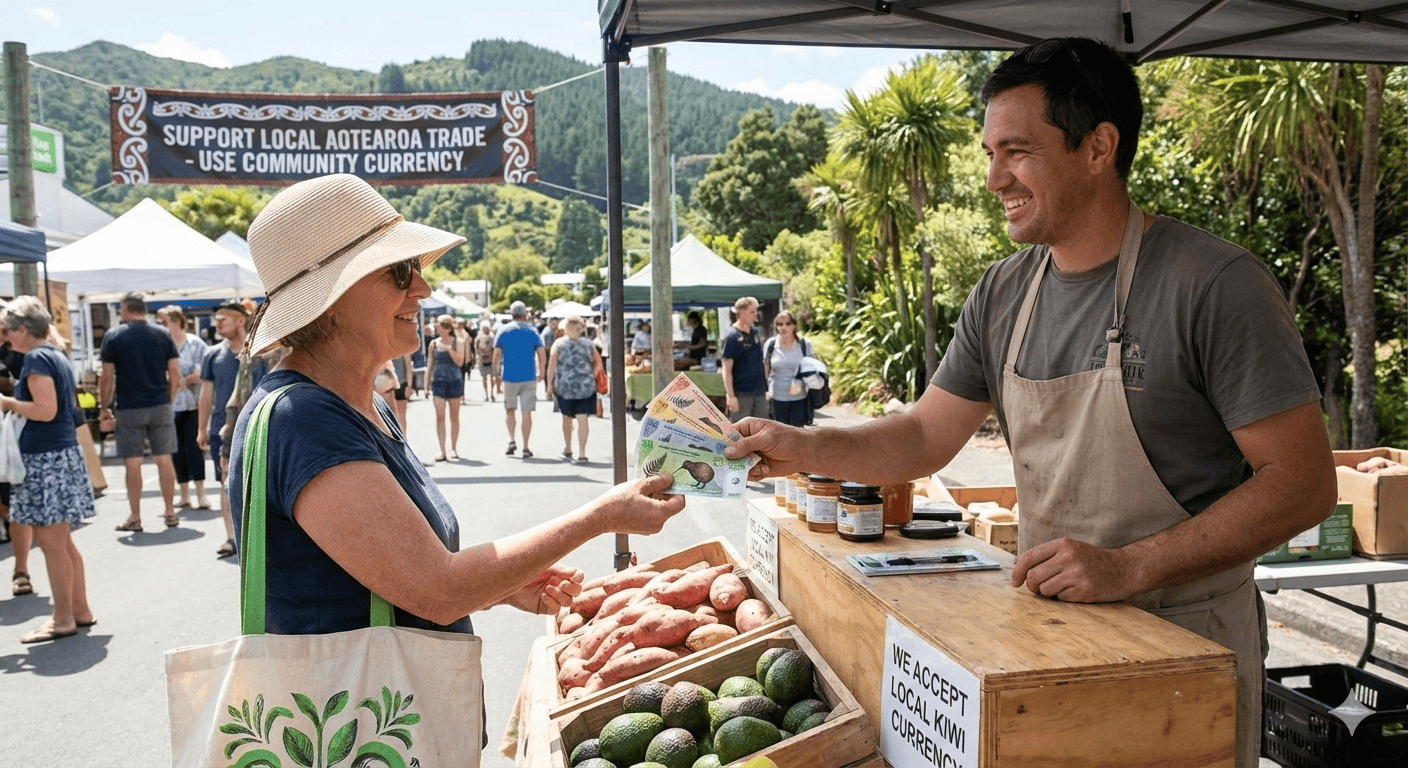
National reform is difficult because the present system is largely controlled by commercial banks and corporations. That is why we think the next system will need to grow from the local level. Communities can create their own currencies, buy up land, charge land rents and resource rents and then share revenue.
So gradually, we build a better model alongside the old one.
This is not a fantasy. It is a practical pathway. The permaculture teachers in our group insisted. Small communities can experiment, learn, adjust and cooperate with neighbours. Over time, these local systems can become strong enough to reshape the wider economy. The point is to seed something new while the old system slowly loses its grip. I suspect it will start with small communities like the Chatham Islands, Rakiura (Stewart Island) and small towns like Karamea who are finally cut off by.

Governance should look more like nature
Our permaculture teachers also insisted that governance must change too. Nature does not run on rigid top-down control. It works through interdependence, feedback loops and nested systems. That is a far better model for democracy than the centralised structures we have inherited.
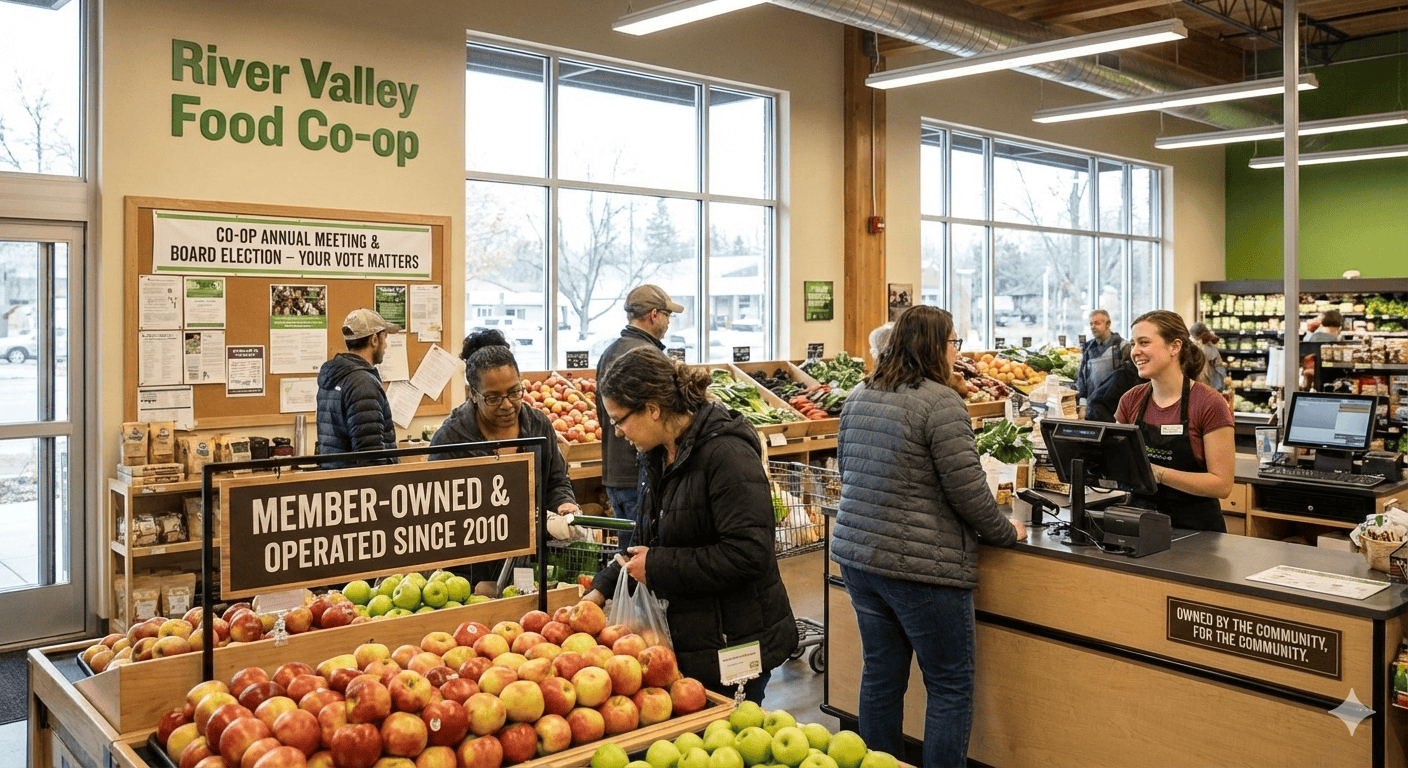
We believe in distributed governance: local decision-making where possible, negotiating where necessary, and genuine accountability throughout the system. Power should flow both ways, not just from the centre. A healthy political economy should resemble a living system, not a machine.
Energy changes everything

We also must face the reality of energy. Fossil fuels powered the growth economy, but they are finite, and their extraction is becoming harder and more expensive. As of late April 2026, maybe 12-15% of oil and gas has been taken from the global energy supply with the Iran war and no end is in sight. Climate change adds another layer of urgency. We cannot continue with a system built for endless expansion when the physical foundations of that expansion are failing.
That means the next economy must be designed for less overall energy. Energy increase is tightly linked to GDP increase. It is unlikely total energy will increase again. So the current model cannot work now that we have declining global energy. This model works after fossil fuel abundance is gone. That is not optional. It is the real world we have now.
The big shift

So the big shift is this: from bank-created money to public money with a circulation incentive, from taxing labour to collecting a full rent from the commons, from domination to partnership, and from centralised control to distributed governance.
It is a shift in institutions, yes. But even more, it is a shift in assumptions. We must stop pretending that the present system is natural, inevitable or permanent. Unfortunately, the system we have now assumes all the things previously listed. It is none of those things. It is a human construction, and it can be replaced if communities and councils reclaim their power.
I wrote this book because I believe that change is still possible. We are not powerless. We can begin with ideas, with local initiatives, with honest discussion, and with the courage to imagine something better. That is what I hope readers will take from The Big Shift: not a sense of despair, but a sense that a more just and workable future can be built — and that the first steps can begin now.


This will make for a beautiful, peaceful world. But those who benefit currently, the money creators and big corporations will do the utmost to prevent this and in the process expose themselves to their greed, obsession with power and control and love of money.
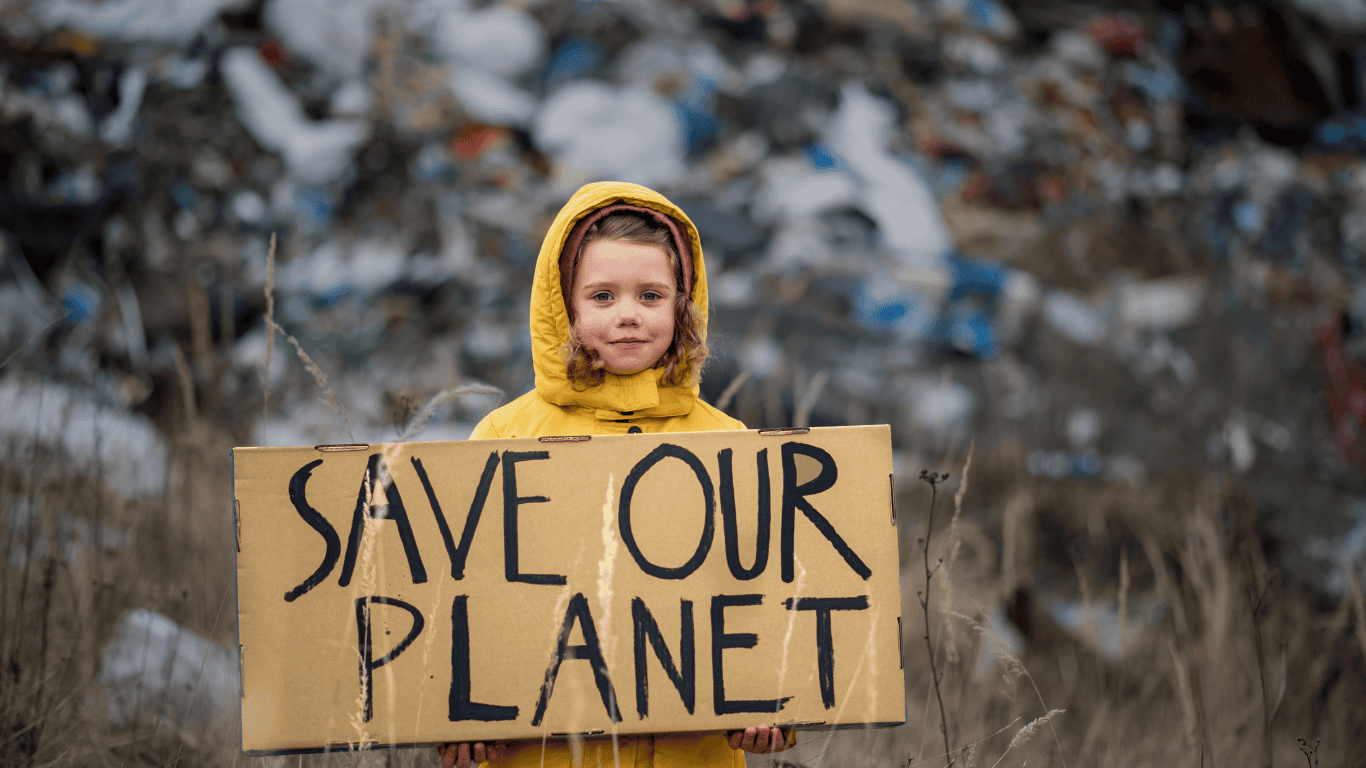
If we don’t awaken we’re doomed to the 6th mass extinction.
This book is good news. The current rulers of the world do not like this good news and the people that deliver it.